RACKET REVIEW
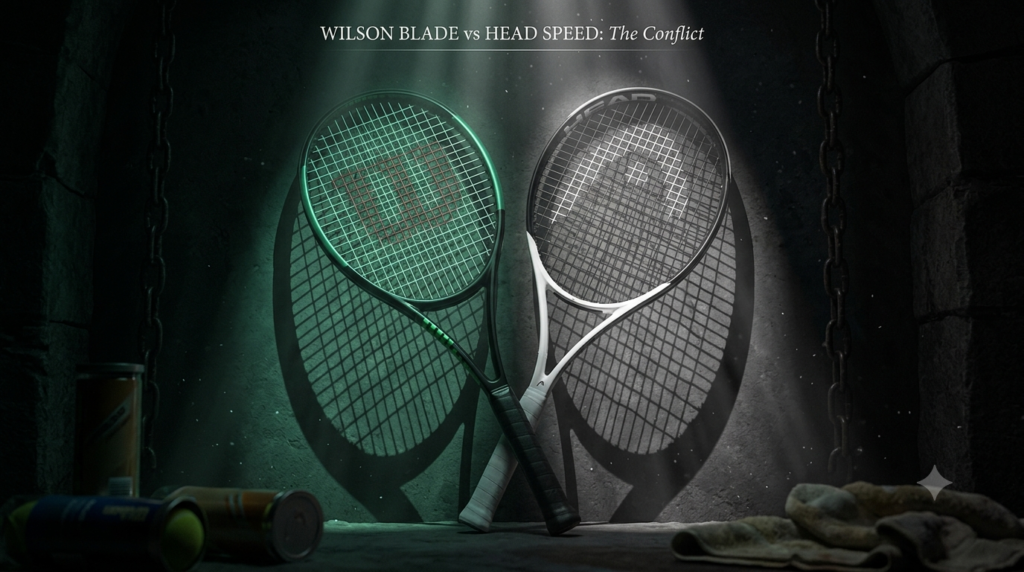
Wilson Blade 100 v9 vs. Head Speed MP 2026
I spend most weekends on a bench at the edge of a tennis court, watching my kid drill serves. Somewhere in the last year I started bringing my own racket along too — partly to feed balls, partly because rallying with her turned out to be the best part of my week. The problem was the racket I was using was a hand-me-down from a decade ago, and the grip tape had basically disintegrated.
So I asked around at the club for what other weekend-warrior parents were actually playing with once they’d outgrown a total beginner frame. Two names kept coming up: the Wilson Blade 100 v9 and the Head Speed MP 2026. Different price points, both aimed at the same kind of player — intermediate, adult, not trying to go pro, just wanting to hit a cleaner ball without an arm ache the next morning.
I bought both, alternated between them for six weeks of regular hitting and a couple of casual club matches, and made my kid try a few swings with each too, since she’s at the age where she’ll be moving into an adult-sized frame herself before long. Here’s what we found.
⭐⭐⭐⭐☆ 4/5 — both frames
Both are legitimate step-up rackets for an adult intermediate who’s outgrown a beginner frame. The Blade wins on comfort, the Speed wins on all-court versatility for $50 less. Neither is overkill, neither is a toy.
Best for: Adult weekend players moving up from a starter racket who hit 1–3 times a week.
Skip if: You’re still deciding whether tennis is going to stick, or you’re already a tournament-level hitter who strings tight — both of these frames are built to be forgiving, not maximally powerful.
What We Got
The Wilson Blade 100 v9 — a 100 sq. in. head, marketed as one of Wilson’s more arm-friendly frames, $279 on Amazon. The Head Speed MP 2026 — also a 100 sq. in. head, Head’s updated all-court frame for this year, $229 on Amazon. Both strung by our local shop at matching tension so the comparison would actually be fair, and both in regular rotation for six weeks.
First Impressions
Out of the box, the Blade felt noticeably more maneuverable — easier to whip through on a compact swing. The Speed felt a touch more head-heavy and plush in the hand. My daughter took a few swings with the Blade and immediately liked how light it felt compared to my old racket. My own first reaction swinging the Speed was recognizing that classic Head flex right away — it’s a distinct feel if you’ve ever played a Head frame before.
After 6 Weeks of Use — The Real Review
Durability so far: No frame chips despite a couple of accidental court drops, and both have held string tension well. Six weeks isn’t a full season, but there’s nothing here that worries me yet.
Comfort / arm feel: The Blade genuinely lives up to its arm-friendly reputation. I’ve got a mild history of tennis elbow, and off-center hits on the Blade are noticeably softer than on the Speed. This was the single biggest difference between the two.
Performance on court: The Speed’s all-court design gave me more confidence coming into net for volleys. The Blade felt better suited to baseline rallying, which is honestly most of what weekend hitting actually is.
Value for money: The Speed is $50 cheaper for a frame that performs in the same tier. Unless comfort is your deciding factor, it’s hard to justify paying more for the Blade.
What I Wish I’d Known
- Neither racket comes pre-strung the way you’ll actually want to play — budget for a restring at your local shop on top of the sticker price.
- It took about two weeks of regular hitting before I stopped noticing the different swing weight compared to my old racket. Don’t judge a new frame after one session.
- If you’re planning to rally with your kid regularly, it’s worth getting rackets with a similar swing weight between you — drills feel more consistent when neither of you is fighting the racket.
The Two Rackets, Side by Side
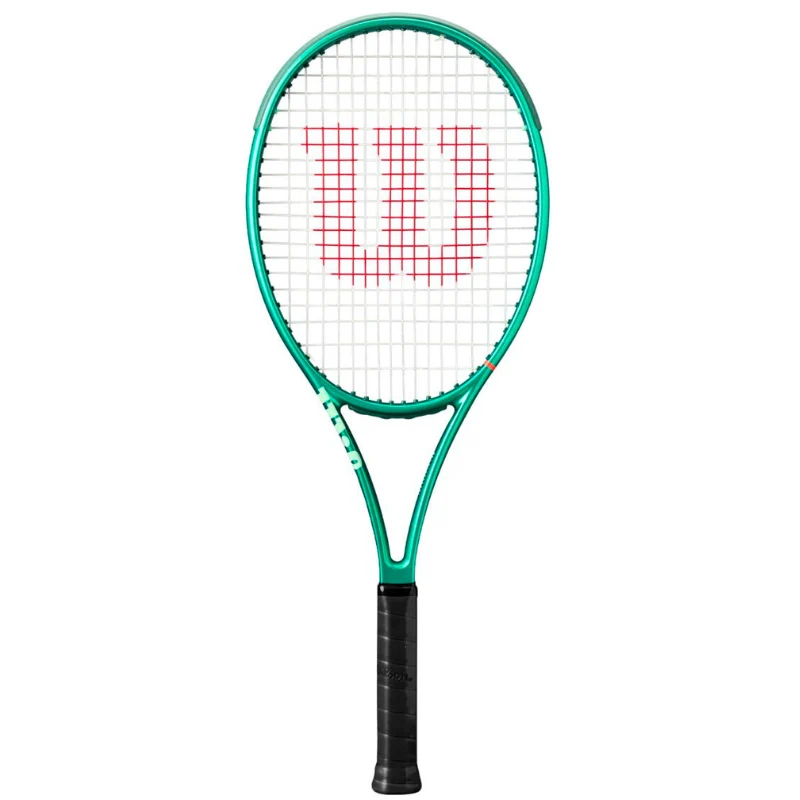
Wilson Blade 100 v9
Who it’s for: adult weekend players who want a step-up frame that’s easy on the arm.
“The one I keep grabbing when my elbow’s cranky.”
$$$ · Premium
- Noticeably arm-friendly on off-center hits
- Forgiving swing for a compact stroke
- Comfortable through long rallying sessions
⚠️ Honest note: costs $50 more than the Speed for a similar skill-level frame — comfort is the reason to pay it, not raw performance.
(Add your affiliate link) · rel=sponsored nofollow
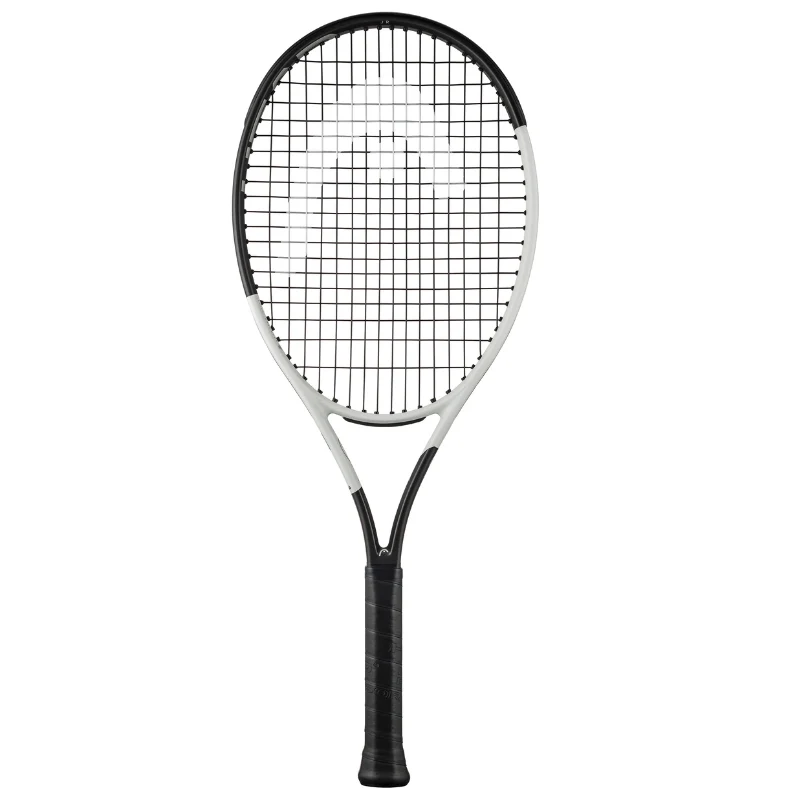
Head Speed MP 2026
Who it’s for: adult intermediates who want one frame that covers baseline and net play.
“The one that made me actually enjoy coming forward.”
$$ · Mid-range
- Confident and stable at net
- Genuinely all-court, not just a baseline frame
- Best value of the two rackets here
⚠️ Honest note: a bit more feedback on off-center hits than the Blade — not harsh, but noticeable if you already deal with arm issues.
(Add your affiliate link) · rel=sponsored nofollow
Parent Verdict
Would I buy both again? Honestly, yes — and we did, because we ended up keeping one each. If you only want one racket and value is the deciding factor, the Head Speed MP 2026 is the easier recommendation for most weekend warriors: it’s $50 cheaper and covers more of the court. If you’ve got any history of arm trouble, or you just want the more comfortable frame to hit with for an hour straight, spend the extra on the Wilson Blade 100 v9.
Either way, both are a real step up from a beginner frame without tipping into tournament-stiff territory. Check current prices on the cards above before deciding — and if you’re buying for a junior moving up from a kids’ racket rather than for yourself, size down before reaching for either of these.
FAQ — Parent Questions
Is either of these too advanced for a true beginner?
Pretty much, yes. Both are step-up frames for someone who already has some hitting experience, not a first racket.
How do they hold up after a few months?
This review covers six weeks — both have held up well so far with no chips or string issues. We’ll update if anything changes.
What size should I get for a 12-year-old moving up from a junior racket?
These are full adult frames. Before jumping straight to an adult Blade or Speed, check a junior step-up racket sized for their height first — going too big too soon can hurt technique.
Is the Blade worth the extra $50 over the Speed?
Only if comfort and arm-friendliness matter more to you than pure value. Performance-wise, they’re close enough that price becomes the tiebreaker for most players.
Can either be used for both practice and club-level matches?
Yes, both are suited to regular practice and casual-to-club-level matches. Neither is built as a maximum-control frame for high-level competitive stringing.