BUYING GUIDE
Best Junior Tennis Bags 2026: What Actually Fits All the Gear
Quick Answer
For most junior players, a 6-pack bag is the sweet spot — it fits 2–4 rackets plus everything else for a tournament day without being too heavy to carry. Backpacks work for training days; 9-packs are worth it once your kid is playing multi-day events.
Affiliate disclosure: AceWhisperer earns a small commission from links on this page, at no extra cost to you. We only recommend gear we’d actually buy.
Our Picks: Bags Worth Buying in 2026

OUR PICK
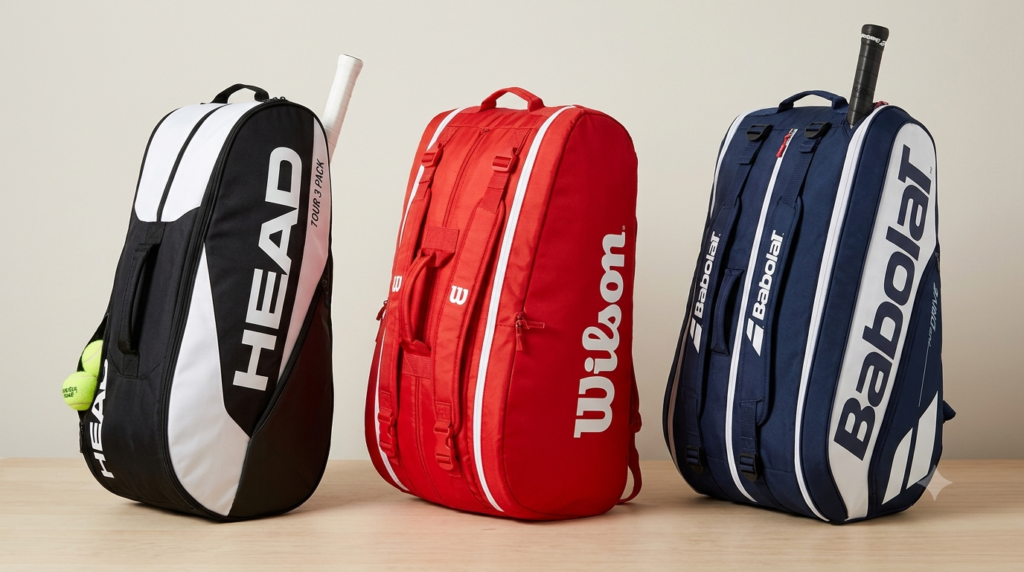
Head Speed 6R Bag
The Speed 6R is the bag that makes tournament mornings calm. Two main compartments — one for rackets, one for everything else — plus a separate shoe compartment that actually has enough room for a pair of court shoes. Dual water bottle pockets on both sides. Backpack straps included. This is the one we’d buy.
Best for: competitive juniors aged 10–15 doing local and regional tournaments
- Separate shoe compartment
- Dual bottle holders
- Fits tournament day kit comfortably
- Head Speed colourway is sharp
⚠️ Honest note: no thermo compartment at this price point. Fine for most juniors, but if your kid is playing in serious summer heat you might want to step up.
Affiliate link · commission earned at no cost to you
ALTERNATIVE #1
Babolat Pure Aero 6pk Bag
The Pure Aero bag has been redesigned for 2026 alongside the new racket line. It’s a proper performance bag — well-padded racket compartment, organised accessory pockets, and a clean look that juniors actually want to be seen with. The extra $20 over the Head gets you a noticeably better build quality.
Best for: juniors on a Babolat setup or who want a premium step-up bag
- Premium feel and construction
- Well-organised accessory pockets
- Looks great at tournaments
- Nadal feeling
⚠️ Honest note: the price jump is real. If your kid is still figuring out whether they want to play seriously, the Head 6R is a smarter buy. For the committed player, this is worth it.
Affiliate link · commission earned at no cost to you
ALTERNATIVE #2
Wilson Ultra V5 Tour 9-Pack
If your kid is doing overnight tournaments or state events where they need to pack for two days, this is the jump to make. The 9-pack has a thermo racket compartment (finally), plenty of clothing room, and backpack straps that make it manageable even for a smaller junior.
Best for: juniors on multi-day tournaments or travelling for competition
- Thermo compartment
- Room for multi-day gear
- Backpack carry option
- Strong value at this size
⚠️ Honest note: overkill for weekly training and one-day events. Buy this when your junior is playing at state level or travelling regularly — not before.
Affiliate link · commission earned at no cost to you
My son had been borrowing my old club bag for two years. It was a 12-pack — enormous, heavy, practically dragging along the ground behind him at every tournament. Half the compartments were empty. The other half were chaos.
When I finally bought him a proper junior bag, the difference was instant. He could find his grip tape. He stopped leaving water bottles at every court. He looked — and felt — like he belonged out there.
Picking the right bag is one of those decisions parents underestimate. Too small and nothing fits. Too big and it’s a chore. Here’s what we’ve learned about what actually works for junior players in 2026.
Backpack vs. 6-Pack vs. 9-Pack: Which Size Does Your Kid Actually Need?
The size of the bag should match the number of rackets your junior travels with — and honestly, their stage of development more than anything else.
Backpack (1–2 rackets)
- Weekly training sessions
- Kids under 10 or casual players
- Lightest to carry, easiest to manage
- Not enough room for tournament day
6-Pack (2–4 rackets)
- Most juniors aged 10–15
- Day trips and local tournaments
- Fits rackets, clothes, snacks, shoes
- Sweet spot for price and practicality
At regionals, my son realised he’d left his second racket at home because his bag had no room and he’d dumped it last minute. A 6-pack with a proper main compartment would have fixed that.
Parent Tip: junior players on a competition pathway should carry at least 2 strung rackets. Make sure whichever bag you buy has a dedicated racket compartment that holds them without squashing the strings against the frame.
Fun fact: most junior bags are designed for adult frames — so a “6-pack” bag will often hold 4 junior rackets with room to spare. The extra space is great for shoe bags and extra grips.
Thermo Compartments: Do Junior Bags Actually Need Them?
Thermo-lined racket compartments (sometimes called “boot” compartments) are designed to protect strings from extreme heat. If you’re playing in Australian summers, this matters more than most gear guides will tell you.
Strings — especially natural gut or multifilament — can lose tension quickly when left in a hot car boot or on a sunny courtside bench. A thermo compartment won’t keep them perfectly cool, but it slows the damage significantly.
Coach Note: below about age 12, most juniors are using synthetic gut strings that are more forgiving. But once your kid is on a proper string setup — multifilament, co-poly, or hybrid — a thermo compartment becomes worth the extra spend.
Strings exposed to 60°C+ (common in a closed car) can lose up to 20% of their tension in a single afternoon. That’s the difference between a fresh hit and a dead string bed.
What to Look For in a Junior Tennis Bag (The Honest Checklist)
Beyond size and thermos, here’s what separates a bag that works from one that drives you crazy after three tournaments.
Worth Paying For
- Separate shoe compartment (or at least a ventilated pocket)
- Bottle pockets on both sides
- Padded carry straps (backpack-style is a game changer)
- Sturdy zips — cheap zips fail within a season
- Enough pockets to separate wet and dry gear
Not Worth Stressing About
- Matching your racket brand exactly
- 12-racket capacity (juniors rarely need it)
- Wheeled bags (unnecessary weight, harder in grassroots venues)
- Built-in wet pockets on entry-level bags
The bag I regret buying was the one with only one water bottle holder. By round two at every tournament, the second bottle was rolling around inside with the rackets.
| Product | Brand | Best For | Level |
|---|---|---|---|
| Speed 6R Bag | Head | Local & regional tournaments | Intermediate |
| Pure Aero 6pk Bag | Babolat | Committed competitors | Intermediate–Advanced |
| Ultra V5 Tour 9-Pack | Wilson | Multi-day events, travel | Competitive |
Key Takeaways
- For most juniors aged 10–15, a 6-pack bag is the right size for competition and fits everything without being too heavy.
- Backpacks are great for training days but too small for tournament play — consider one for each purpose.
- Check for dual water bottle pockets and a shoe compartment before buying — these are the details that matter on a long tournament day.
- Thermo compartments matter more as your junior moves into higher-grade strings. Entry-level synthetic gut is more forgiving.
- Don’t buy a 9-pack or 12-pack until your junior is competing at state level or doing overnight events — it’s unnecessary weight.
- The Head Speed 6R is our pick for the best value-to-features ratio for a competitive junior in 2026.
- Always check if backpack straps are included — it’s a small thing that makes a big difference at 8am on court one.
Frequently Asked Questions
Answers below are drafted from the article above — please review before publishing.
What size tennis bag does a junior player need?
Most juniors aged 10–15 do best with a 6-pack — it fits 2–4 rackets plus the rest of the day’s kit without being too heavy. A backpack is fine for training-only use, and a 9-pack is worth it once your junior is doing multi-day or overnight tournaments.
Do junior tennis bags need a thermo compartment?
Not always. Below about age 12, most juniors use synthetic gut strings that hold up fine without one. Once they move to multifilament, co-poly, or hybrid string setups, a thermo compartment is worth paying for — strings left in a hot car can lose up to 20% of their tension in an afternoon.
What’s the difference between a 6-pack and a 9-pack tennis bag?
A 6-pack fits 2–4 rackets and is sized for day trips and local tournaments. A 9-pack holds more rackets and clothing for multi-day or overnight events, but it’s extra weight and space most juniors don’t need until they’re competing at that level.
Should I buy the same brand bag as my junior’s racket?
Not necessary. Matching brands is a nice-to-have, not a functional one — what actually matters is compartment layout, strap comfort, and zip quality.
How long should a junior tennis bag last?
With regular tournament use, a well-made 6-pack should hold up for at least a full season or two before zips or straps start to wear — sturdy zips are one of the details worth paying for up front.
The Bottom Line
The right bag makes a surprising difference on tournament day — not just in practicality, but in how your junior feels walking onto court. The Head Speed 6R is our pick for most competitive juniors: it has everything you need, nothing you don’t, and it won’t break the bank.
If your child is just getting started, a junior backpack is a smart entry point. And if they’re doing state-level events or overnight tournaments, the 9-pack is worth the step up.